PG09
Lost Worlds of Melanesia feat. Pangia Festival
Journey Across Papua New Guinea, Solomon, and Vanuatu
Countries: Papua New Guinea, Solomon Islands, Vanuatu
- 11 daysDuration
- ModerateDifficulty
- Level
- Moderate – includes up to 5 hrs hike. This is travel to areas with limited facilities.
- Duration
- 11 days.
Trip starts in Manila DAY 0
Trip Ends in Fiji DAY 11 - Activities
- Trekking, sightseeing, swimming, snorkeling, elements and wildlife encounter, cultural immersion.
- Rooms & meals
- Hotels, lodges and guesthouses - double sharing, restaurant meals excluded.
- Specifically excluded
- International flights to Manila and return from Fiji
Visas
Restaurant meals
Extra luggage allowance. - Visa
- Western passports visa free otherwise e-visas: PNG
Solomon
Vanuatu
It is sole responsibility of participant to secure entry to countries of destination.
In the 1930s, Australian gold prospectors flying over the mountains of Papua New Guinea made a discovery that genuinely shocked the outside world. Beneath the clouds, hidden between vast Highland valleys, lived millions of people nobody knew were there. Entire societies had developed in near isolation, separated by some of the most difficult terrain on Earth. Many valleys had their own languages, customs and tribal systems, completely unknown to the modern world until aircraft finally crossed the mountains above them. That sense of isolation helps explain why Melanesia feels so different from almost anywhere else on the planet. The word itself comes from the Greek melas nesoi, meaning “black islands”, a term used by European explorers to describe the darker-skinned populations they encountered across this part of the Pacific. Stretching from Papua New Guinea through the Solomon Islands, Vanuatu and Fiji, Melanesia became one of the most culturally fragmented regions on Earth, shaped by volcanoes, jungle mountains, unpredictable seas and thousands of years of limited contact between communities. Nowhere else on Earth did isolation produce such extreme linguistic and cultural density. Papua New Guinea alone is home to over 800 languages, roughly 10% of the world’s total. In Europe, empires and trade routes wove societies together. In Melanesia, nature enforced separation, and surprised the world with a result.
PAPUA NEW GUINEA
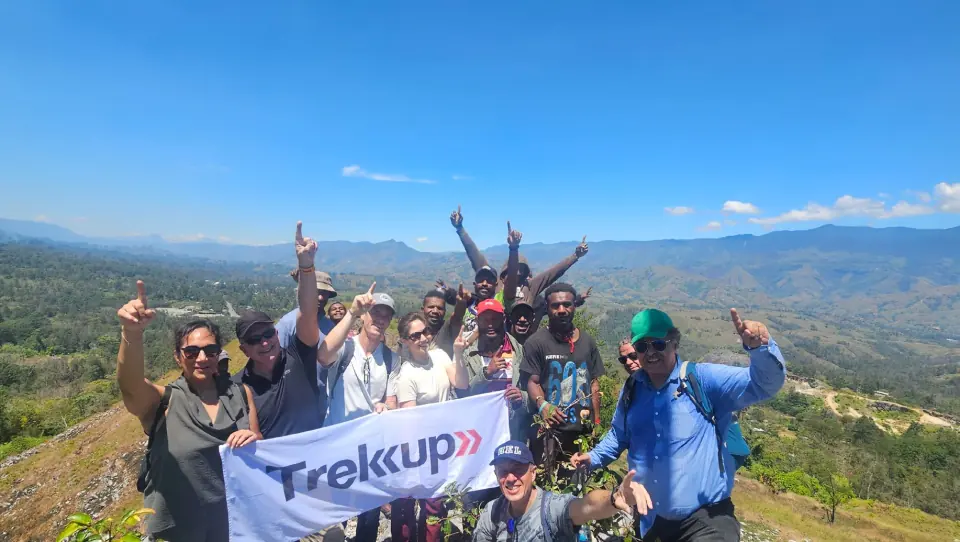
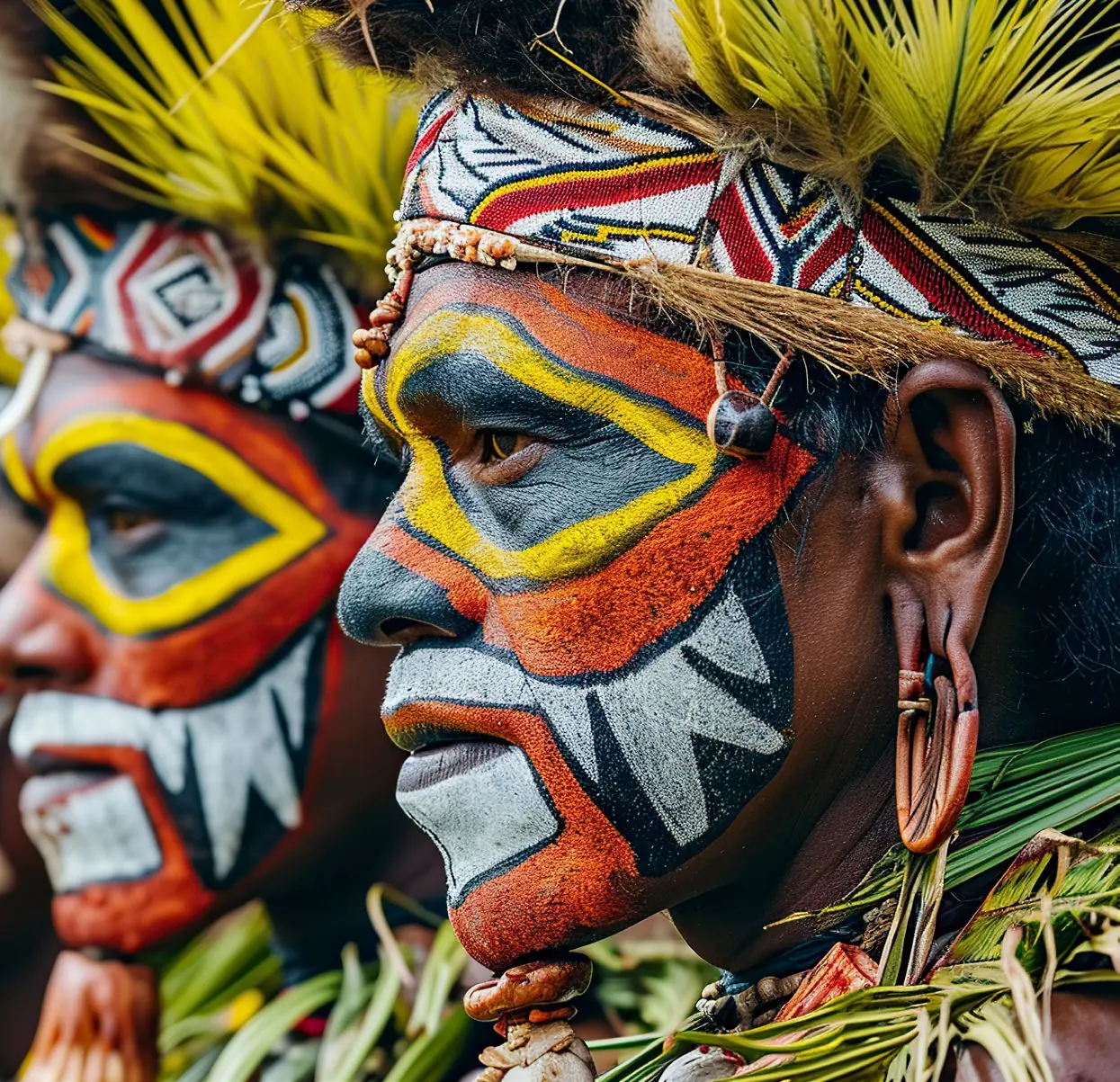
Papua New Guinea remains the tribal emotional core. The Highlands are not merely scenic, they are a living museum of tribal complexity where identity, ritual, and cosmology remain vibrantly operational. The Mount Hagen Sing-Sing is no sanitized performance; it is a high-stakes arena of alliance, rivalry, and ancestral power, where clans communicate through spectacular visual languages of paint, feathers, and movement. The sheer extravagance of the birds of paradise found here seems to mock any notion of evolutionary restraint. This is nature, and culture, at its most audacious. Modern PNG is a study in creative tension: smartphones beside spirit houses, billion-dollar mines adjacent to subsistence gardens, ancient traditions navigating the forces of globalization. It is raw, occasionally chaotic, and intellectually exhilarating precisely because it refuses to resolve into something easily digestible.
SOLOMON ISLANDS
Solomon Islands carry the heavy imprint of 20th-century history, particularly the savage WWII campaign on Guadalcanal. Yet beneath the rusting wrecks and jungle-reclaimed battlefields lies something far older and quieter. These are islands where traditional life still moves according to rhythms of fishing, gardening, and kastom law rather than global schedules. The volcanic landscapes, steaming geothermal zones, black sand beaches, and abrupt emerald peaks feel pre-historical.
VANUATU
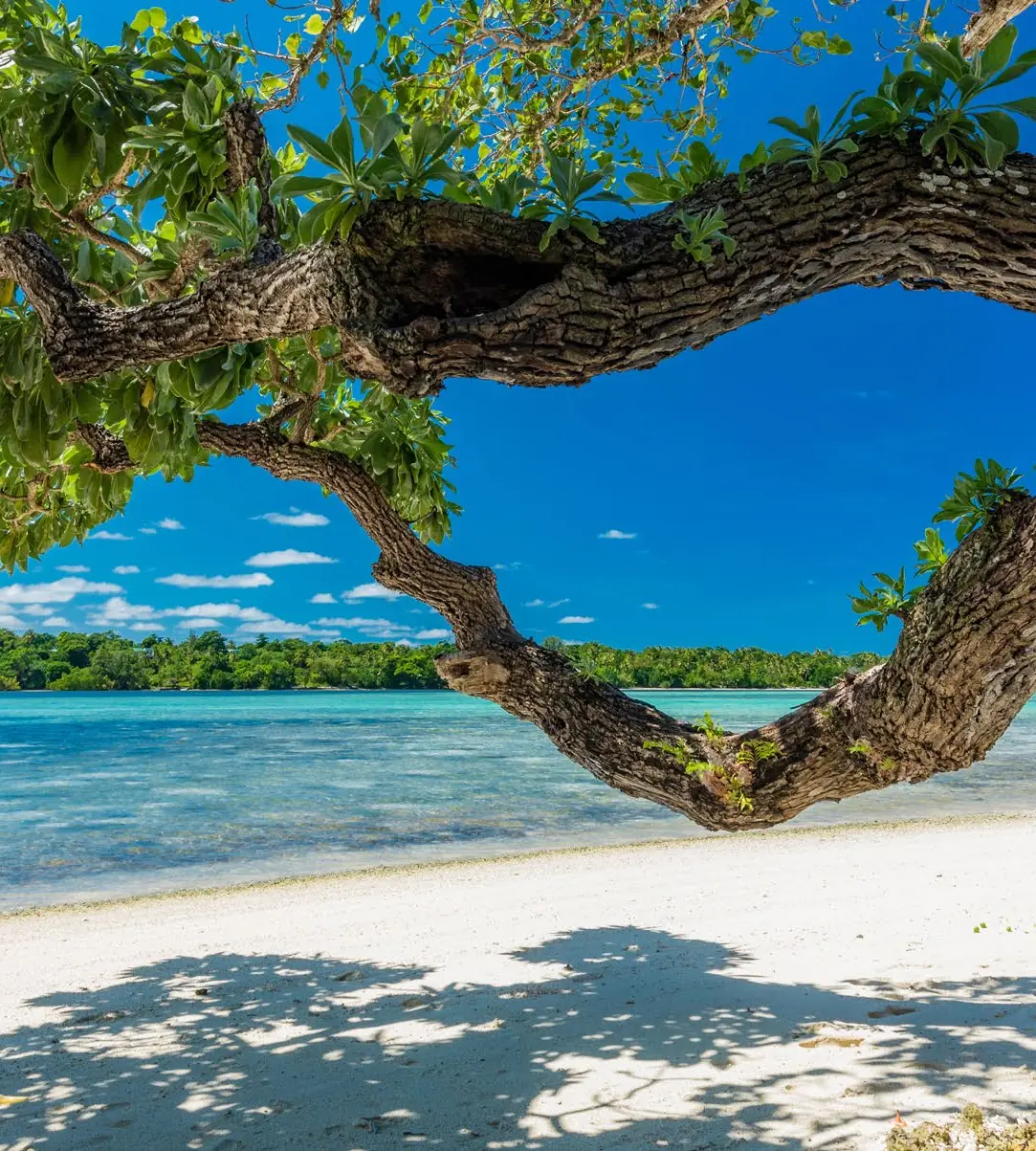
Vanuatu may be the Pacific’s greatest tectonic miracle, a country quite literally built by geological violence. The islands exist because the Pacific and Australian tectonic plates continue colliding deep beneath the ocean floor, forcing magma upward and slowly creating entirely new land. Unlike many volcanic regions elsewhere in the world, this process never really stopped. Vanuatu is not simply volcanic by history, but volcanic in real time, with landscapes still actively forming beneath people’s feet. While many parts of the world modernized rapidly during the twentieth century, traditional kastom culture remained remarkably resilient here. Despite Aussie influence everywhere, on islands like Tanna, village life still revolves around nakamals, kava rituals and community structures rooted far deeper than colonial borders. Above it all towers Mount Yasur, one of the world’s most accessible active volcanoes, erupting continuously as if reminding everyone that the Pacific is still geologically unfinished. At times Vanuatu feels almost suspended between worlds. Pickup trucks and mobile phones appear beside villages where traditional authority still carries more weight than politics, and where stories about spirits, volcanoes and ancestors remain part of everyday life rather than folklore preserved for tourists.
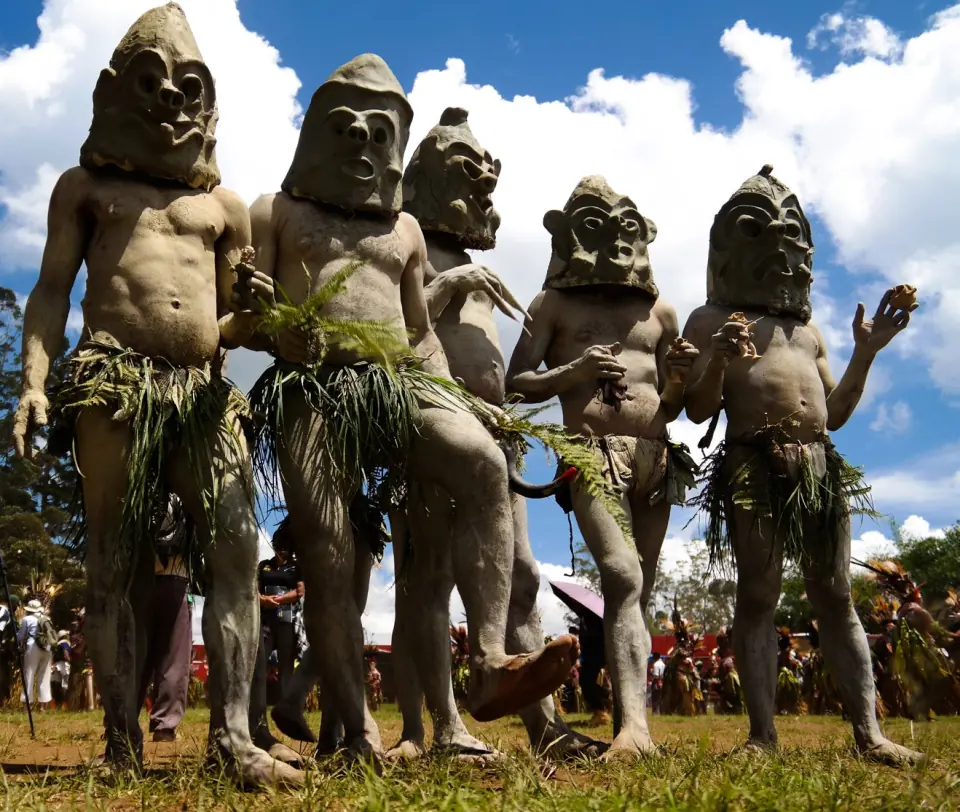
Despite geographical proximity, Melanesia was never meant to be one place – quite opposite. It is a constellation of distinct worlds forged in separation, yet bound by shared tectonic fury, oceanic isolation, and respected human determination to create meaning against overwhelming odds. Our expedition will let you understand something new and profound about human cultural evolution: how environment, distance and imagination interact to produce astonishing diversity. In a postcard perfect background.
Day by day
-
Day 0DEPARTURE FROM MANILA
Meeting in Manila International in the early evening for a flight to PNG.
-
Day 1MT HAGEN + PANGIA
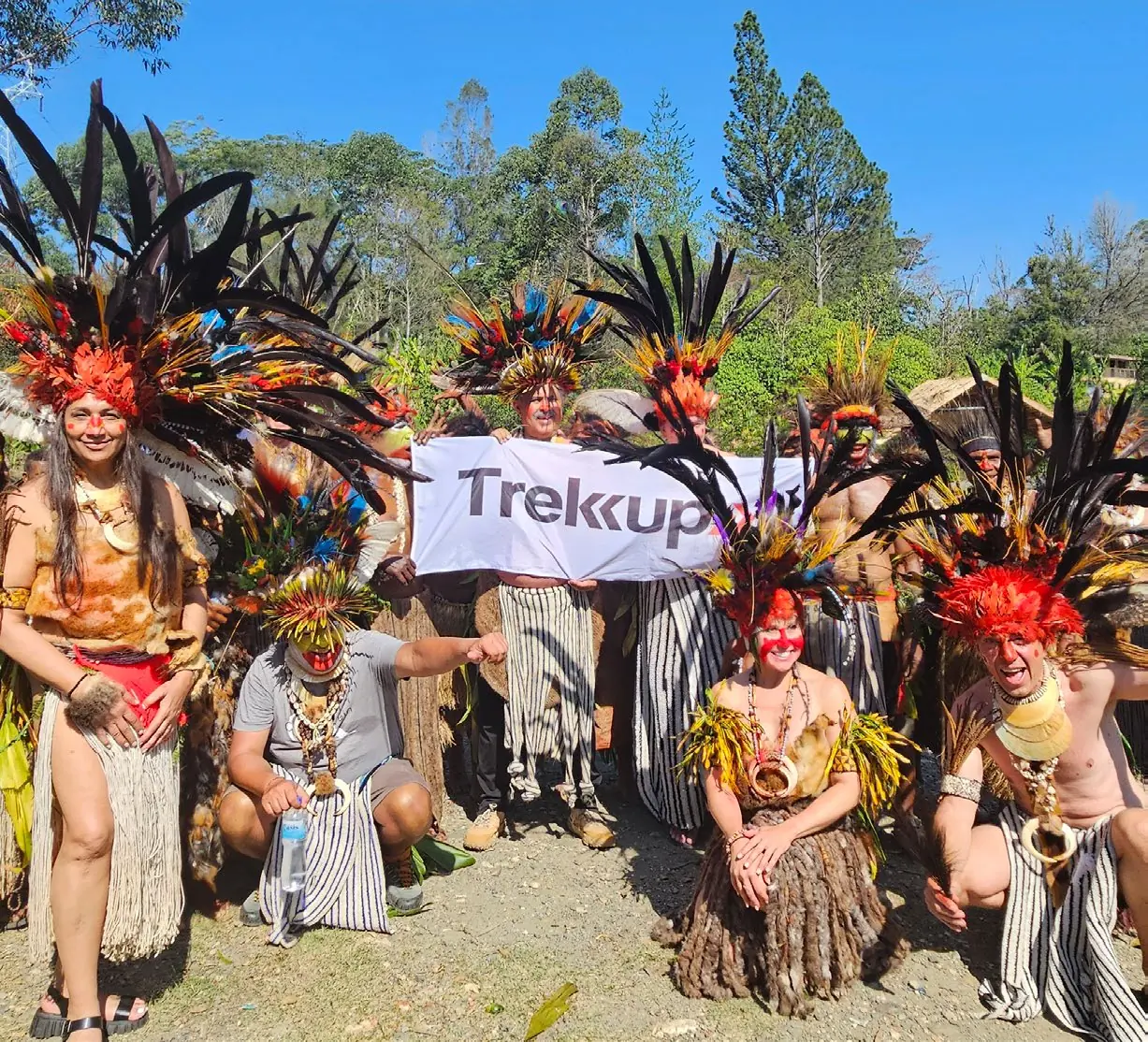
Arrival into Port Moresby in the early morning, followed by a short domestic flight into the Highlands toward Mount Hagen, the cultural heart of Papua New Guinea. The landscape changes dramatically as dense tropical coastline gives way to cool mountain valleys, tribal villages, and rolling Highlands scenery. We kick start our trip with tribal festival in Pangia, in Southern Highlands Province, a tribal gathering showcasing the ancestral heritage of the Lalibu, Pangia, and Kewabi peoples. The festival features traditional face-painting, elaborate feathered headdresses (bilas), kundu drums, and bamboo flutes, alongside local craft displays. Overnight in Pangia, guesthouse.
-
Day 2MT HAGEN: PANGIA FESTVAL + MINDIMA SKELETON TRIBES
Today we spend half day at festival and drive back to Mt. Hagen. After lunch drive east on the Highlands Highway toward Kundiawa / Mingende, then into Mindima, a Chimbu village in Simbu Province. This is the home community of the Omo Bugamo “Skeleton Tribe.” Hunters who went into the mountain caves did not return. Warriors found a cave of bones and a monster. They painted themselves as skeletons, black and white clay, and mixed fake bones among the real ones so the creature would take them for the dead. The monster slept; they came home. Overnight in Mindima Skeleton guesthouse.
-
Day 3GOROKA + ASARO MUDMEN
Today we journey eastward along the Highlands Highway toward Goroka, one of the great overland journeys through the Highlands. The drive itself is part of the expedition. We travel through the fertile Wahgi Valley and the Kundiawa region, crossing tribal territories, mountain villages, roadside markets, and coffee-growing communities rarely visited by outsiders. Along the way, we cross the dramatic Daulo Pass at approximately 2,400 meters above sea level, where mist-covered valleys and forested peaks stretch endlessly across the Highlands. We begin with a visit to the famous Asaro Mudmen, one of Papua New Guinea’s most iconic tribal traditions. According to local legend, warriors once disguised themselves in grey river mud and ghostlike masks to terrify rival tribes emerging from the jungle mist. Beyond the performances, the day focuses on deeper interaction with local communities and village life. We visit traditional settlements, learn about Highlands customs, and gain insight into the complex tribal identities that continue to shape this region today. In the late afternoon we reach domestic airport for return to Moresby. Overnight in Port Moresby.
-
Day 4SOLOMON ISLANDS
This morning we continue deeper into Melanesia with a flight to the Solomon Islands, a country many people struggle to place on a map despite the fact that some of the fiercest battles of World War II unfolded here. Arrival in Honiara, where jungle-covered hills meet a coastline layered with wartime history. We start with Bonegi Beach, where Japanese shipwrecks still rest beneath crystal-clear turquoise water just offshore. Rest of the day at well-deserved leisure. Overnight in Honiara.
-
Day 5SAVO VOLCANO
Today is dedicated to Savo Island, a remote volcanic island rising dramatically from the sea northwest of Honiara. We will cross strait called Iron Bottom Sound toward an island that remains largely untouched by mass tourism. Savo is wild, humid, and deeply atmospheric, with black volcanic beaches, steaming geothermal areas, dense jungle, and isolated villages shaped entirely by volcanic activity. Unlike the polished tropical islands most people imagine, this is the raw Pacific: untamed, mysterious, and wonderfully unpredictable. Here we will hike to peak of volcano, crossing multiple hot springs, orange sulphur rivers, until we reach geothermal springs. In the shadow of the volcano, Savo is also home to megapodes: chicken-sized birds that come down at dawn to bury their eggs a metre deep in the hot sand at Panueli, then leave the mountain’s heat to incubate them for some fifty days. Chicks hatch fully feathered and can fly within hours. By the end of the day, covered in salt, volcanic dust we settle down for sunset at bonfire at the beach. Overnight at the island, beach resort.
-
Day 6ISLANDS
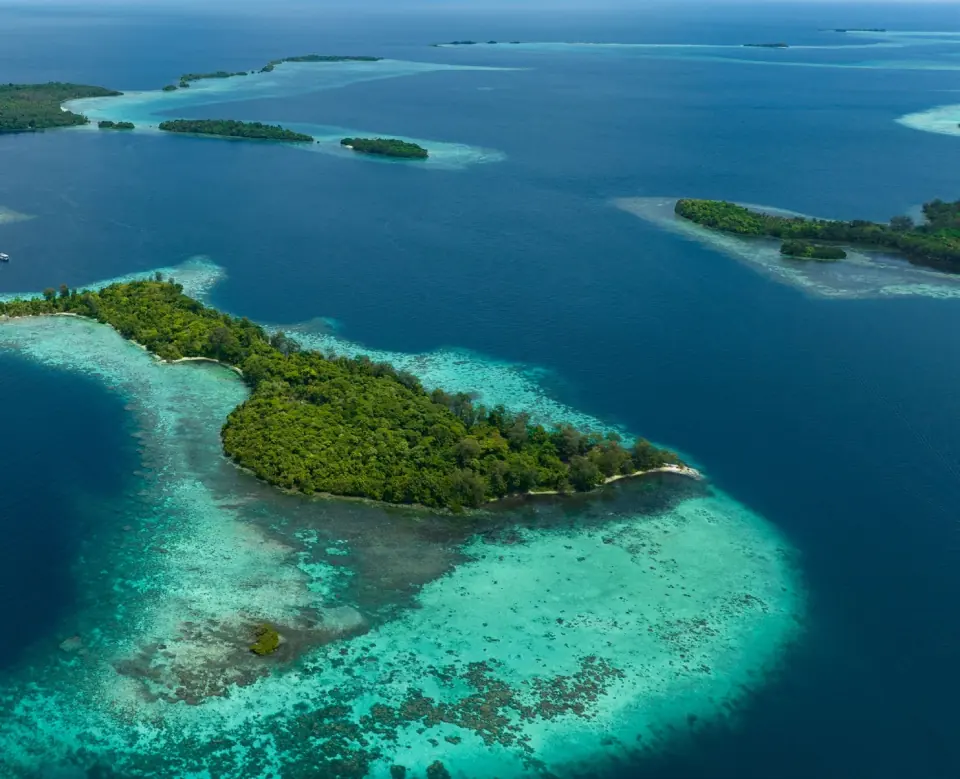
Wake up to the sound of waves at our beach resort while the lagoon is still calm. We enjoy breakfast beneath the palms before setting out by boat, crossing the waters of the Florida Islands toward the narrow entrance of Roderick Bay. Here, resting on the reef, lies the wreck of the World Discoverer. Once a working expedition vessel, she has remained here since being driven onto the reef, her weathered and rusting hull now slowly becoming part of the landscape. We stop to swim and explore the shallow waters around the wreck. From Roderick, we continue to Simon Bay, whose exceptionally rich coral reefs are among the highlights of the area. The water is remarkably clear, with vibrant coral formations, abundant marine life, and large reef fish moving through the deeper water. We snorkel along the reef drop-off and explore the edge of the nearby village, taking our time to enjoy this remote corner of the islands. Rest of the day spent in and around the water. In the afternoon, we make our way back across the strait to main island. Overnight in Honiara.
-
Day 7INLAND GUADALCANAL
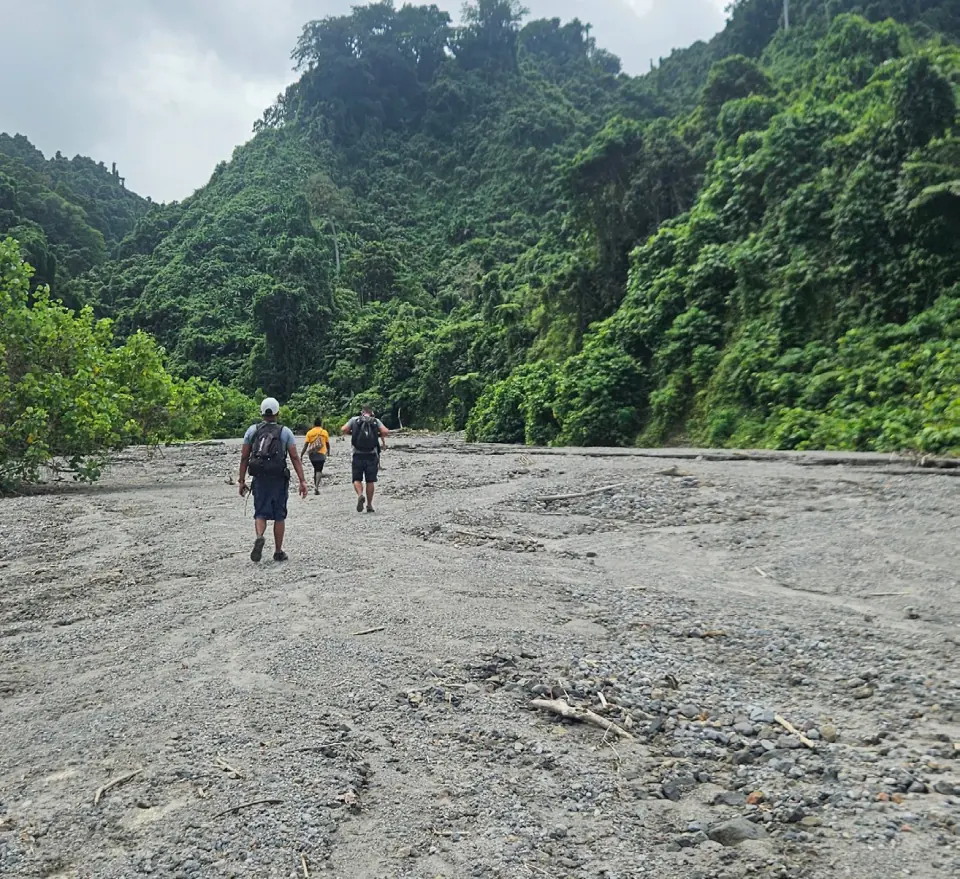
Today we leave the coast behind and travel inland toward mountain lodge, surrounded by dense tropical forest and the rugged landscapes of Guadalcanal. The road takes us away from the main settlements and into a quieter, greener side of the island, where the forest closes around the track and the sound of running water becomes our guide. From here, we continue on foot through the jungle, following forest paths toward a series of waterfalls hidden deep among the vegetation. We cross streams, pass through thick rainforest, and gradually reach the cool pools beneath the falls. Here we can swim, relax in the shade, and enjoy the remote surroundings far from the heat of the coast. Nearby lies a hidden cave containing yet another waterfall. Naturally, we will take the opportunity to explore it before returning through the forest. Overnight at a mountain lodge.
-
Day 8HONIARA TO VANUATU
This morning we return to Honiara and wander through the city's local markets, where fresh fruit, fish, and everyday island life unfold in colorful chaos. After some final exploration of the capital, we transfer to the airport for our flight to Vanuatu. Landing in Port Vila immediately feels different. The atmosphere is slower and more relaxed, with the waterfront, harbor, and surrounding islands giving the city a distinctly South Pacific character. We spend the evening exploring the waterfront, watching the sunset over the harbor, and taking in our first impressions of Vanuatu. No major plans tonight. The Pacific works best when you stop trying to rush it. Overnight in Port Vila.
-
Day 9TANNA: MOUNT YASUR VOLCANO
This morning we fly to Tanna, one of the most fascinating islands in the South Pacific. Life here still revolves around kastom traditions, village culture, and the rhythms of nature rather than modern schedules. We spend the morning visiting Yakel and nearby kastom villages with local guides, learning about traditional life on the island beneath giant banyan trees and around village nakamals, where storytelling and community remain central to daily life. In the afternoon, we continue exploring the island before heading toward Mount Yasur for sunset. Few places on Earth allow you to stand this close to an active volcano. As darkness falls, the crater glows and bursts of volcanic activity light up the night sky while the ground rumbles beneath your feet. It feels less like sightseeing and more like watching the Earth actively reinvent itself. Tonight we stay near the volcano, where the distant rumble of Yasur becomes part of the evening atmosphere. Overnight on Tanna Island.
-
Day 10PORT VILA
After breakfast, we return to Port Vila on a domestic flight. The day shifts dramatically from volcanic ash to tropical blue water as we head toward the coast for a swim in the clear turquoise waters surrounding Port Vila. The afternoon is deliberately unhurried, giving us time to relax, swim, and enjoy one last taste of Vanuatu's tropical side. As evening falls, we trade the day's adventures for something far more local: kava bars and Port Vila nightlife. Kava may not win any culinary awards, but sharing shells of it with locals while conversations drift into the evening feels like an essential Pacific experience. Overnight in Port Vila.
-
Day 11DEPARTURE VIA FIJI
After breakfast, we take our time with some final souvenir shopping before heading to the airport. It's time to bid farewell to the Pacific and begin the journey home, with the option to continue your travels in Vanuatu or Fiji.
Photos
See yah in Melanesia xTrekkup Crew
For dates and prices, see the upcoming trekkups.
More trekkups
-
 DJ06
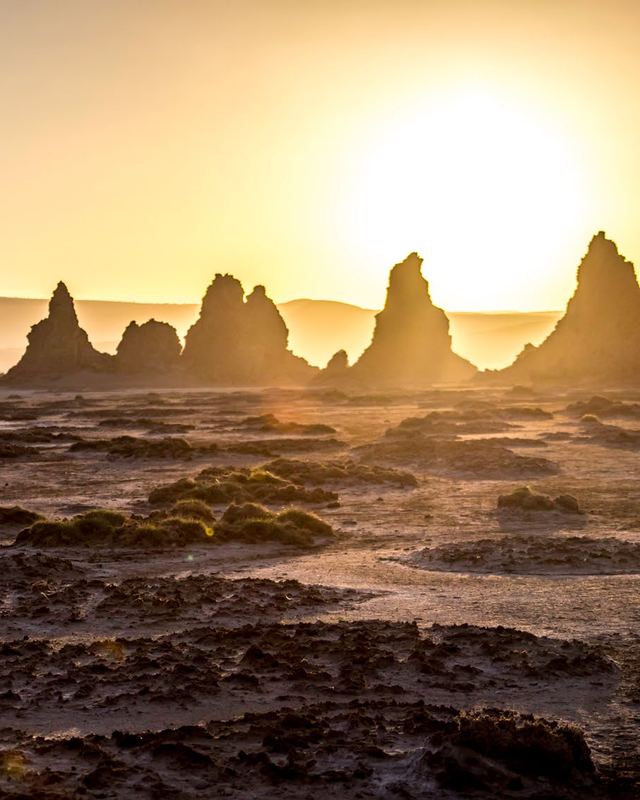
Moonscapes & Whale Sharks
Exploration of Djibouti Countries: Djibouti Difficulty: Easy to Moderate5 days -
 Photo: Adam Jones
BF14
Mud Max
Sahel Safari across Burkina Faso and Niger Countries: Burkina Faso, Niger Difficulty: Easy8 days -
 MZ17
North of South
Journey across Mozambique, Eswatini and Lesotho via South Africa Countries: Mozambique, Eswatini, Lesotho Difficulty: Easy9 days